



Think all French people speak the same way? Think again! From Paris to Provence, every region has its own sound. But which accent is considered the clearest, most elegant French, the one linguists call “pure”?
Join me as we explore the history, the myths, and the surprising favorites of the French themselves. Whether you’re learning French or just love the language, this episode will change the way you hear French.
Commencez par consulter cette liste de vocabulaire, cela facilitera votre compréhension :
plonger (dans un sujet) : to dive into a topic
détrompez-vous : think again / you’re mistaken
distinguer : to tell apart
ville-carrefour : crossroads city / hub city
accueillir : to welcome
évoluer : to evolve / to change over time
figé : fixed / frozen
remonter (au XVIᵉ siècle) : to go back (in time)
tournures : turns of phrase
éviter : to avoid
perçu : perceived
sondage : survey / poll
s’atténuer : to fade / to lessen
marqueur identitaire : identity marker
Transcription (English translation available at the end of the article) :
Salut à tous et bienvenue dans ce nouvel épisode ! Aujourd’hui, on plonge dans un sujet qui fascine autant qu’il divise : les accents français.
Vous pensez peut-être que tous les Français parlent comme dans Amélie Poulain ou comme les présentateurs du journal télévisé ? Détrompez-vous ! Même si vous ne les distinguez pas encore tous, il existe des centaines d’accents différents en français. Non seulement en France, mais aussi en Belgique, en Suisse, au Canada, et dans tous les pays francophones.
Alors voici la question du jour : quel est l’accent français le plus pur ? Spoiler : la réponse va probablement vous surprendre. Allons-y !
Commençons par déconstruire quelques mythes.
Premier mythe : l’accent parisien serait le français “pur”.
C’est logique, non ? Paris, capitale culturelle, médiatique, politique… On pourrait croire que c’est là que se parle le meilleur français. Sauf que non ! Paris a toujours été une ville-carrefour, populaire, accueillant des gens venus de toute la France et du monde entier. Résultat : l’accent parisien a constamment évolué, absorbé des influences, et il est loin d’être “pur” ou stable. D’ailleurs, si vous écoutez des enregistrements parisiens des années 1920, vous serez surpris de la différence avec aujourd’hui.
Deuxième mythe : le français québécois serait le français “original”.
Certains pensent que, parce que les Québécois ont conservé des expressions et des tournures du XVIIᵉ siècle, ils parlent comme Molière. C’est romantique… mais faux. Le français québécois a évolué de son côté, avec ses propres influences — de l’anglais, des langues amérindiennes, et de conditions climatiques qui façonnent même la phonétique ! C’est un français authentique, mais pas un français “figé dans le temps”.
Alors, où trouve-t-on ce fameux accent “le plus pur” ? La réponse traditionnelle, c’est la Touraine, dans le Val de Loire.
Remontons au XVIᵉ siècle. François Iᵉʳ vient de faire du français la langue officielle du royaume, à la place du latin. Mais quel français ? Celui de Paris, avec ses tournures populaires ? Celui du Midi, influencé par l’occitan ? Non. On choisit le français parlé entre la Seine et la Loire : un français clair, élégant, sans accent trop marqué.
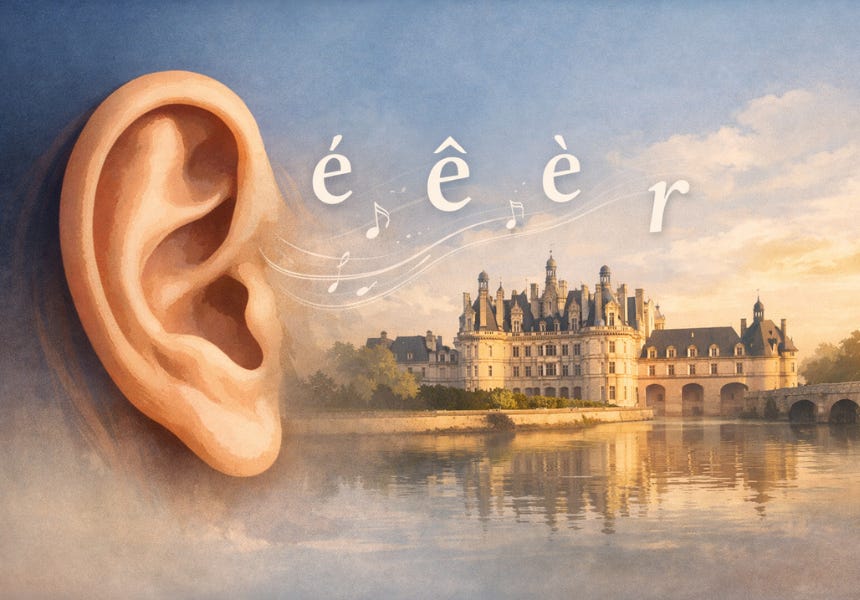
À l’époque, la vallée de la Loire est le centre intellectuel de la France. Les rois y font construire des châteaux (Chambord, Amboise, Chenonceau), les poètes de la Pléiade — comme Ronsard et Du Bellay — y vivent et y écrivent. La Cour royale apprécie ce parler neutre, qui évite les extrêmes : ni trop populaire comme à Paris, ni trop marqué régionalement.
L’écrivain Alfred de Vigny disait du langage tourangeau qu’il était « le plus net, le plus pur, celui qui n’a ni lenteur, ni vitesse, ni accent ». Pendant des siècles, on a donc considéré la Touraine comme le modèle de prononciation.
Aujourd’hui encore, de nombreux étudiants étrangers choisissent cette région pour apprendre le français, car on y parle une variété perçue comme neutre et compréhensible par tous.
Maintenant, vous vous demandez peut-être : « OK, la Touraine a le français le plus pur historiquement… mais est-ce que c’est aussi l’accent préféré des Français ? »
Pas du tout.
Selon un sondage réalisé en 2025 auprès de 1 500 Français, voici le classement des accents préférés :
🥇 1er — L’accent du Sud (42 %)
Qu’il vienne de Marseille, de Provence ou de Toulouse, l’accent du Sud arrive largement en tête. Pourquoi ? Il est perçu comme chantant, chaleureux, vivant. Les voyelles s’étirent, les mots dansent… c’est l’accent de la convivialité et du soleil.
🥈 2ᵉ — L’accent basque (27 %)
Un accent fort, musical, lié à une identité culturelle puissante. On y entend presque l’influence de l’euskara, la langue basque, dans la mélodie des phrases.
🥉 3ᵉ — L’accent parisien (10 %)
10 % d’entre eux estiment que l’accent parisien est le plus agréable et délicat.
À noter que 12 % des Français disent qu’aucun accent n’est particulièrement beau.
Ce résultat montre bien une chose : le modèle linguistique n’est pas forcément le modèle esthétique. Les Français préfèrent les accents qui ont une personnalité, une mélodie, une âme. Le “pur” n’est pas toujours le “préféré”.
Aujourd’hui, les linguistes observent un phénomène : les accents régionaux s’atténuent, surtout chez les jeunes. L’école, les médias nationaux, la mobilité géographique… tout cela uniformise un peu la prononciation.
Certains regrettent cette perte de diversité. D’autres y voient une évolution naturelle.
Mais une chose est sûre : les accents restent un marqueur identitaire fort. Ils racontent d’où on vient, ils portent une histoire, une culture. Et ils continuent de jouer un rôle majeur dans la façon dont on perçoit la langue française.
Alors, retenez bien ceci :
Historiquement, l’accent le plus “pur” est celui de la Touraine. C’est un héritage du XVIᵉ siècle qui perdure.
Aujourd’hui, l’accent préféré des Français est celui du Sud, pour sa chaleur et sa musicalité.
En réalité, il n’y a pas vraiment d’accent “supérieur”. Chaque accent a sa richesse, son histoire, sa beauté.
Mon conseil ? Ouvrez vos oreilles. Écoutez le français du Québec, de Marseille, de Bruxelles, de Dakar. Amusez-vous à repérer les différences. C’est comme ça qu’on découvre toute la richesse de cette langue incroyable.
Merci d’avoir écouté ce podcast, et à très bientôt pour un nouvel épisode !
Sources
Sondage sur les accents préférés des Français — Preply, 2024–2025
Recherches linguistiques — Laboratoire Ligérien de Linguistique (CNRS)
Want to go deeper?
This Friday’s premium letter dives deep into French accents — subscribers only.
For a small monthly subscription, you unlock premium content + a seat in the monthly workshop.
Serious about French? This is where it starts.

Transcript – English Translation
Hi everyone, and welcome to this new episode!
Today, we’re diving into a topic that fascinates people just as much as it divides them: French accents.
You might think that all French people speak like in Amélie Poulain or like TV news presenters. Think again! Even if you can’t tell them all apart yet, there are hundreds of different accents in French. Not only in France, but also in Belgium, Switzerland, Canada, and all French-speaking countries.
So here’s today’s question: what is the “purest” French accent?
Spoiler alert: the answer will probably surprise you. Let’s go!
Let’s start by breaking down a few myths.
First myth: the Parisian accent is “pure” French.
It sounds logical, right? Paris is the cultural, media, and political capital… You might think that the “best” French is spoken there. But actually, no. Paris has always been a crossroads city—popular, welcoming people from all over France and the world. As a result, the Parisian accent has constantly evolved, absorbed influences, and is far from being “pure” or stable. In fact, if you listen to recordings of Parisian speech from the 1920s, you’ll be surprised by how different it sounds from today.
Second myth: Quebec French is the “original” French.
Some people believe that because Québécois French has kept expressions and turns of phrase from the 17th century, they speak like Molière. It’s a romantic idea… but it’s false. Quebec French has evolved in its own way, with its own influences—English, Indigenous languages, and even climate conditions that shape pronunciation! It’s authentic French, but not French “frozen in time.”
So where do we find this famous “purest” accent?
The traditional answer is Touraine, in the Loire Valley.
Let’s go back to the 16th century. King Francis I had just made French the official language of the kingdom, replacing Latin. But which French? The French of Paris, with its popular turns of phrase? The French of the south, influenced by Occitan? No. The choice was the French spoken between the Seine and the Loire: clear, elegant French, without a strong regional accent.
At the time, the Loire Valley was the intellectual center of France. Kings built castles there (Chambord, Amboise, Chenonceau), and poets of the Pléiade—like Ronsard and Du Bellay—lived and wrote there. The royal court appreciated this neutral way of speaking, which avoided extremes: neither too popular like Parisian speech, nor too regionally marked.
The writer Alfred de Vigny said that Touraine speech was “the clearest, the purest, the one with neither slowness, nor speed, nor accent.” For centuries, Touraine was therefore considered the model of pronunciation.
Even today, many foreign students choose this region to learn French, because the variety spoken there is seen as neutral and easy for everyone to understand.
A small and amusing detail: in Touraine, people still make an oral distinction between words like jeune (young) and jeûne (fasting), where the circumflex accent marks a longer /u/ sound. This phonetic nuance has disappeared elsewhere!
Now you might be wondering:
“OK, historically Touraine has the purest French… but is it also the French people’s favorite accent?”
Not at all.
According to a 2025 survey of 1,500 French people, here is the ranking of favorite accents:
🥇 1st – The Southern accent (42%)
Whether it comes from Marseille, Provence, or Toulouse, the Southern accent comes out far ahead. Why? It’s seen as melodic, warm, and lively. Vowels stretch, words seem to dance—it’s the accent of friendliness and sunshine.
🥈 2nd – The Basque accent (27%)
A strong, musical accent, linked to a powerful cultural identity. You can almost hear the influence of Euskara, the Basque language, in the melody of the sentences.
🥉 3rd – The Breton accent (8%)
Discreet, but appreciated for its authenticity.
Next come the Parisian accent (only 10%), and in last place… the Norman accent, with just 6% of the votes.
12% of French people say that no accent is particularly beautiful.
This result clearly shows one thing: the linguistic model is not necessarily the aesthetic model. French people prefer accents with personality, melody, and soul. What is “pure” is not always what is “preferred.”
Today, linguists are observing a phenomenon: regional accents are becoming weaker, especially among young people. School, national media, geographic mobility—all of this tends to standardize pronunciation.
Some people regret this loss of diversity. Others see it as a natural evolution.
But one thing is certain: accents remain a strong marker of identity. They tell us where we come from; they carry history and culture. And they continue to play a major role in how we perceive the French language.
So remember this:
Historically, the “purest” accent is the one from Touraine. It’s a legacy from the 16th century that still exists today.
Today, the French people’s favorite accent is the Southern accent, for its warmth and musicality.
In reality, there is no truly “superior” accent. Every accent has its own richness, history, and beauty.
My advice? Open your ears. Listen to French from Quebec, Marseille, Brussels, Dakar. Have fun spotting the differences. That’s how you discover the full richness of this incredible language.
Thanks for listening to this episode, and see you very soon for a new one!


