


September is a special month for me. It’s my birthday month, but above all, it’s harvest season. I’ve been lucky enough to take part in the harvest twice, in the Beaujolais region at Saint-Laurent-d’Oingt and in Champagne at Rilly-la-Montagne. For a few weeks, the vineyards fill with grape pickers, bent over the vines with pruning shears (un sécateur) and a bucket in hand. The days end with very long dinners, with plenty of wine, of course... At the time, I was just there to make a little money. Looking back, those weeks are among my fondest memories.
I have to be honest with you: I’m no wine expert. I couldn’t tell you if a wine has notes of wet stone or blackcurrant leaves. Describing wine isn’t my thing. Drinking it, on the other hand… If you really want to understand what’s in your glass, read Meg Maker. She’s an award-winning wine columnist, and her articles will make you want to open a bottle.
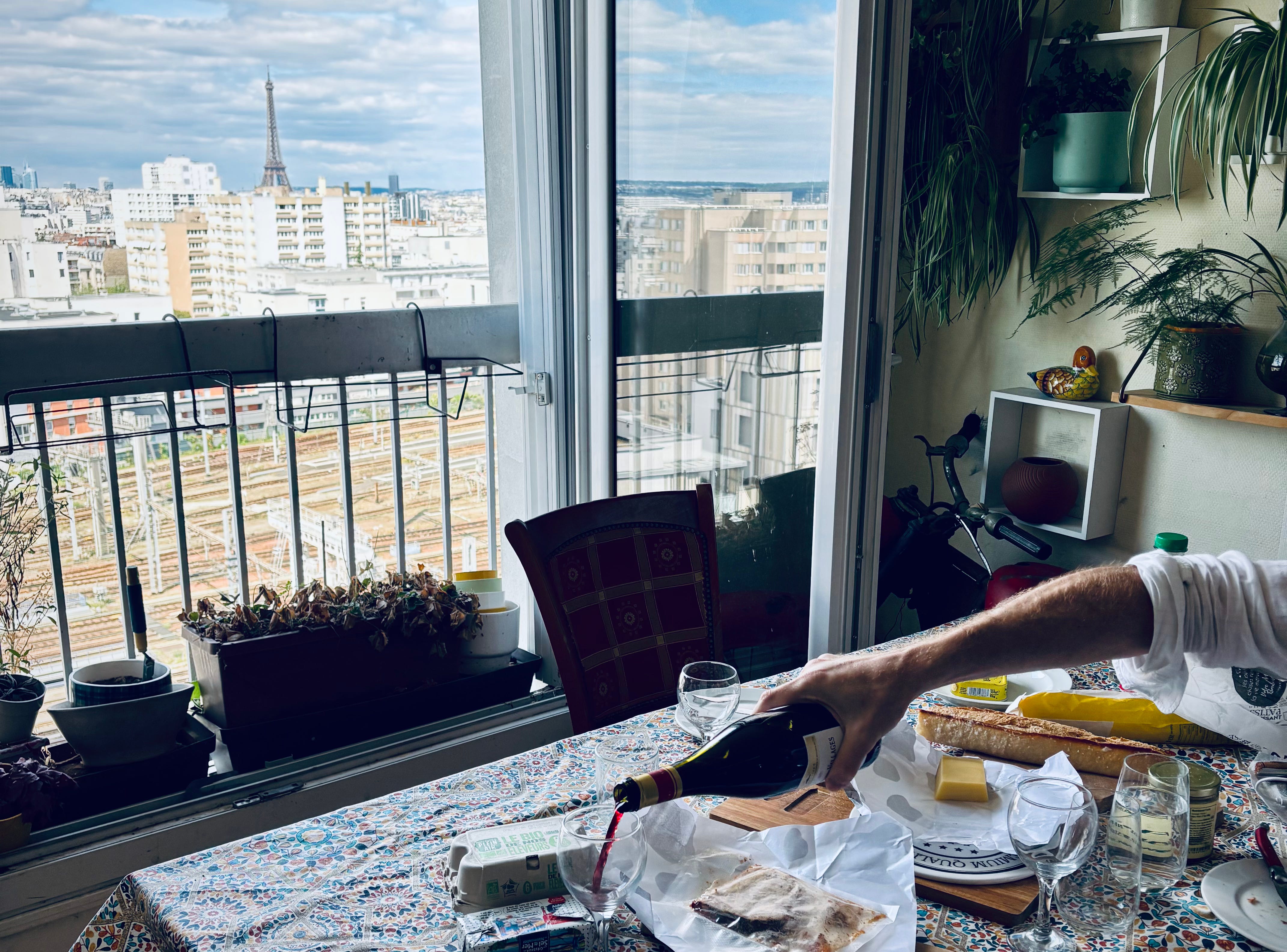
So today, no tasting notes. Just the phrases and unspoken rules you need to know to order wine in France the way the locals do, so the server can relax and you don’t end up with de la piquette in your glass.
« Du vin » means nothing
You’ve found a terrace, the sun is out, and the server is coming. In a French bar, nobody asks for “du vin”. The first thing you give is the colour. And most of the time, you drop the word vin completely.
✓ The basic order « Un verre de rouge, s’il vous plaît. » “A glass of red, please.”
✓ The apéro classic « Un petit blanc, s’il vous plaît. » “A glass of white, please.” Don’t worry about the petit: same glass, same price. French people put it in front of everything they’re fond of. Un petit café, un petit verre, un petit blanc… And when they say it, petit usually shrinks to p’tit.
✓ The summer terrace « Un rosé, s’il vous plaît. » Between June and September, half the terraces in the South are drinking this.
Apéro first: wine in disguise
Before dinner comes the apéro. And like with beer, we French couldn’t help ourselves. We mixed things.
Le kir: white wine with crème de cassis (blackcurrant liqueur). Named after Félix Kir, a priest who was mayor of Dijon. Une idée pour un prochain podcast ?
Le kir royal: the same, with champagne instead of white wine. The festive version.
Le rosé pamplemousse: rosé with grapefruit syrup. Wine purists roll their eyes at it, which has never stopped anyone on a terrace in July.
Le rosé piscine: rosé served over ice in a big glass. It was a bit of a joke at first, and now some producers sell bottles with piscine on the label.
But be careful which wine you use when mixing it:
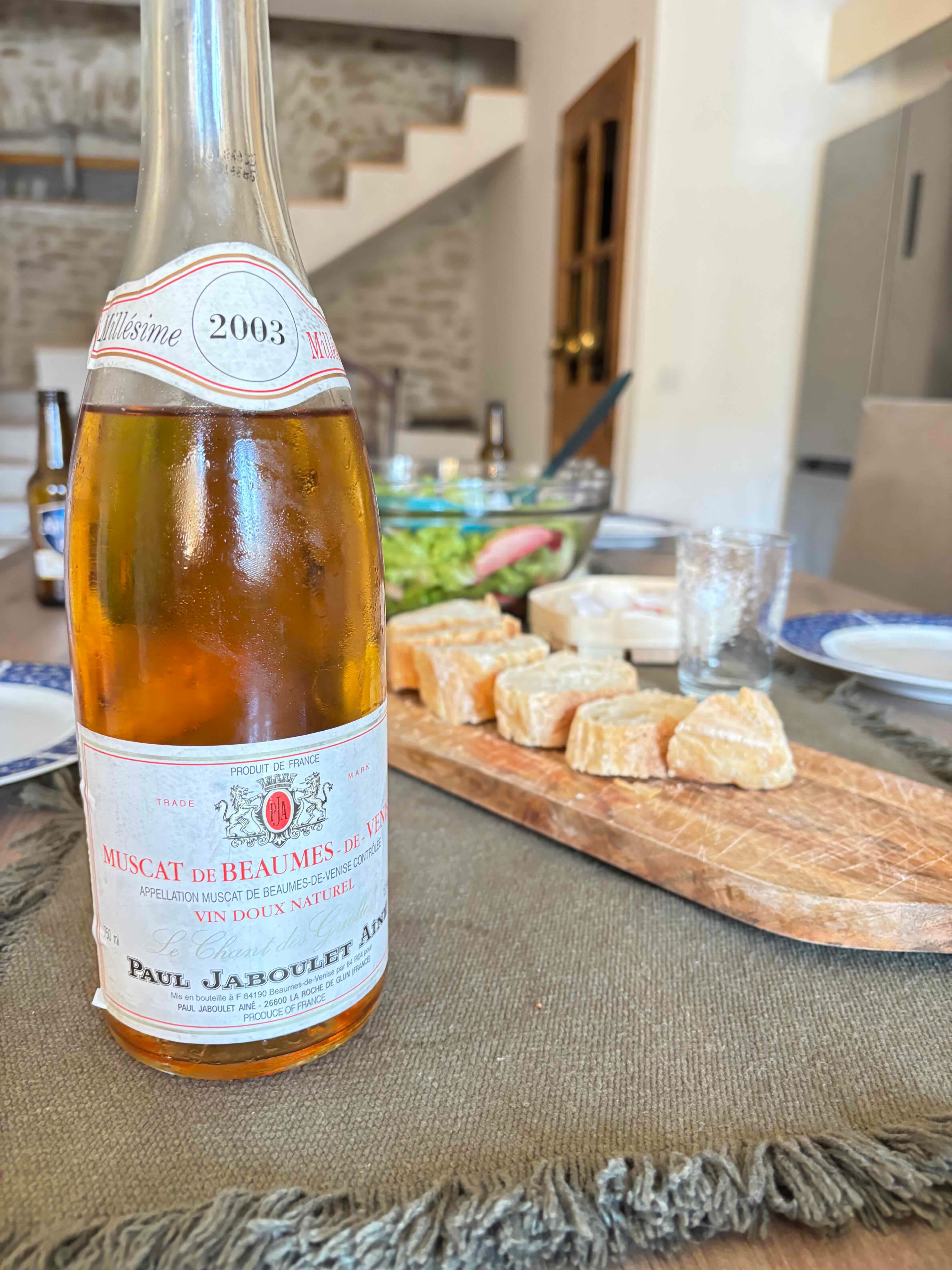
Personally, j’ai un petit faible (I have a soft spot) for Muscat de Beaumes-de-Venise as an aperitif, especially when it’s over 20 years old.
At the table: glass, jug or bottle?
Now you sit down for dinner, and the real question begins.
Un verre. Between 12 and 15 cl. If you stand at the counter of an old Parisian café, you might hear someone order un ballon de rouge. Le ballon is the round glass with a stem. It’s a bit old school, and I love it. « Qu’est-ce que vous avez au verre ? » “What do you have by the glass?”
Un pichet. The jug. This is usually the house wine, served in a small carafe. You order the size: un quart (25 cl) or un pichet de 50 (50 cl). Don’t ask for un demi here. You’ll get a beer. « On va prendre un pichet de rouge. » “We’ll take a jug of red.”
The waiter might ask: « En quart ou en 50 ? » "A quarter or a fifty?"
Un pot. Only in Lyon. Le pot lyonnais is a heavy little bottle of 46 cl, often filled with Beaujolais or Côtes-du-Rhône. Order one in a bouchon (a traditional Lyon restaurant) and you instantly gain ten points.
Une bouteille. For those looking for something serious. You’ll need to ask for the wine list. « Je peux voir la carte des vins ? » “Can I see the wine list?”
Ask for a place, not a grape
You open the wine list, and this is where a lot of English speakers get lost. In France, a wine label mostly tells you where the wine comes from, not which grape it’s made with. If you ask a waiter for “a merlot”, he’ll understand. But in most bistros, he’ll answer with the name of a region anyway.
A small cheat sheet to get you started:
You like Pinot Noir? Ask for un bourgogne rouge.
You like Chardonnay? Ask for un chablis or un bourgogne blanc.
You like Sauvignon Blanc? Ask for un sancerre.
You like light, fruity reds? Ask for un beaujolais.
You want a reliable red that goes with everything? Un côtes-du-rhône.
It’s a simplification (wine people, please don’t insult me), but it works at any bistro counter in France.
Un côtes-du-rhône looks easy on paper. Out loud, it’s another story. This Friday, we’ll work on the pronunciation of wine words, especially the regions, so you can order with confidence instead of pointing at the menu.
Every wine is masculine. La Bourgogne is the region, but you drink un bourgogne. La Champagne is the region, le champagne is what’s in the flute. Same thing for un bordeaux, un sancerre, un côtes-du-rhône. And on a menu, the wine takes a lowercase letter, the region keeps its capital.
Still lost? Ask.
✓ Asking for advice « Je cherche un rouge plutôt léger. Vous me conseillez quoi ? » “I’m looking for a fairly light red. What would you recommend?”
✓ With food « Qu’est-ce qui irait bien avec le magret ? » “What would go well with the duck breast?” Waiters love this question. You’re asking for their opinion, and in France that’s the fastest way to make a friend.
The bottle arrives
If you order a bottle in a restaurant, there’s a ritual. The waiter shows you the label, opens the bottle, and pours a small amount into the glass of whoever ordered.
You smell it, take a small sip, and nod.
« C’est parfait, merci. »
That’s it. The point of this little test is to check that the wine isn’t faulty. If it smells like wet cardboard or an old cellar, it’s probably corked:
« Je crois qu’il est bouchonné. » “I think it’s corked.”
In that case, they’ll bring you another bottle. If you just don’t like it, well. You chose it. C’est la vie.
And if the waiter lingers, waiting for a comment, here are four words that always work:
rond: smooth and soft, with no sharp edges. « Il est rond, très agréable en bouche. » “It’s smooth, very pleasant in the mouth.”
gourmand: fruity, soft and easy. The wine you want a second glass of. « Il est gourmand, on en reprendrait bien un verre. » “It’s delicious, I’d happily have another glass.”
équilibré: balanced. Nothing sticks out. « Il est bien équilibré. » “It’s well balanced.”
long en bouche: the taste stays after you swallow. Professionals even measure it in caudalies: one caudalie is one second. « Il est très long en bouche. » “It has a really long finish.”
And if you want to sound like someone who’s lived here for years, there’s one more word: gouleyant. It describes a wine that’s easy to drink, that slides down a bit too easily. « Il est gouleyant, ce petit rouge. » Say it at the table and watch the reaction.
In natural wine bars (very trendy in Paris right now), you’ll also hear people say a wine is glouglou. Same idea, but younger. It’s the sound of the wine going down.
A iconic scene from the movie L’aile ou la cuisse: « Le vin, c’est la terre. »
How to clink glasses without causing a scandal
Before the first sip, the French trinquent: they clink glasses. A few rules:
Wait until everyone has a glass.
Clink with each person, one by one. Unless the champagne is served in crystal flutes: clink those too hard and you’ll lose points with the hostess.
Look them in the eyes. Every time. According to an old French superstition, if you don’t, you get seven years of bad sex. I’m not saying I believe it, but I’d rather not take any chances.
Don’t cross arms with someone else who’s clinking. Also bad luck.
What do you say?
« Santé ! » Works everywhere, with everyone. « Allez, tchin tchin ! » is another classic. « À la vôtre ! » Literally “to yours” (your health). Polite, or for a group. « À la tienne ! » Same thing, with a friend.
And when you serve wine, serve the others before yourself. Filling your own glass first is the one wine mistake a French table will actually remember. And if you’re not the host, you shouldn’t even touch the bottle. Well, in theory, anyway.
If you mix colours
During a long French dinner, you’ll sometimes switch from one colour to the other. If you do, remember this old saying:
« Blanc sur rouge, rien ne bouge. Rouge sur blanc, tout fout le camp. » “White after red, nothing moves. Red after white, everything falls apart.”
Sur (on top of) here means “after”. The idea is that white wine after red is fine: your head stays steady. Red after white, and the evening (and you) goes downhill. Foutre le camp is very familiar French for “to clear off”, so tout fout le camp means everything goes to pieces.
Later, among friends: wine slang
Dinner is over, but the evening isn’t. At a friend’s place, wine rarely gets called vin.
Le pinard. The most famous slang word for wine. Any wine, usually nothing fancy. It became a legend in the trenches of the First World War, where French soldiers received their daily ration of pinard. « Il reste du pinard ? » “Is there any wine left?”
Une quille. Slang for a bottle. Opening one is ouvrir une quille. « Allez, on ouvre une quille ! » “Come on, let’s open a bottle!”
La piquette. Cheap, sour, bad wine. The word originally meant a drink made by adding water to what was left of the grapes after pressing, so you can imagine the quality. « C’est de la piquette. » “This is cheap plonk.”
Un canon. A glass of wine, in old-fashioned bistro slang. « On va boire un p’tit canon ? » “Shall we go have a glass?” Very friendly, a bit retro. That’s what Cowboy, un vieux de la vieille (an old-timer) and the star of the Beaujolais harvest, used to say.
On va boire un verre ou… prendre un pot au bar ? P’tit godet ou… ? (OSS 117)
Un pot and un godet are two more casual ways to say 'a drink'.
One last thing
On the third Thursday of November, bistros all over France display the same sign: « Le Beaujolais nouveau est arrivé ! » It’s the first wine of the year, made from grapes harvested just a few months earlier, in September. Wine experts never sing its praises, and I’ll readily admit that it’s far from being a great wine. But I still have a soft spot for it. Every glass takes me back to the days when I worked in the vineyards around Saint-Laurent-d’Oingt, in the hills of Beaujolais.
If you’re in France that week, go to the bistro, order un verre de beaujolais nouveau and look everyone in the eyes when you clink.
And now I’m curious: what’s the best (or worst) glass of wine you’ve had in France? Have you ever ordered something with total confidence and received something completely different? Tell me in the comments.
À la vôtre.
Timo

Hey, I’m Timothée.
I write about the French language the way it’s actually lived: through cafés, music, awkward conversations, old expressions, cultural rituals, and all the small things textbooks usually forget.
If you enjoy learning French through stories, culture, music, and the hidden meaning behind words, you’ll probably enjoy the premium version of this newsletter.
Become a premium member and get access to full podcasts, translations, vocabulary notes, interactive exercises, and live workshops — all for about the price of a coffee each month.
If you enjoyed this content but don’t feel like subscribing just yet, you can always buy me a coffee. It’ll motivate me to create more content like this!
Excellent advice! 🙏
This is wonderful and a true keeper of a piece! As one who's frequently called upon to order for the table, I'm happy to have these idiomatic expressions in my pocket.
Also, merci beaucoup for recommending me to your readers! True fact: My ancestor Pierre Piché emigrated to Canada from the Loire in the mid-1600s, from a town called Faye-la-Vineuse — yes, "Faye of the Vines." His family name means "pitcher," or "jug." So it's really no wonder I found my way into wine. Tchin tchin ! 🥂