

You’ve made it to Paris. Or Lyon, Marseille, or a sun-drenched village square in Provence where old men play pétanque and squint at you like you might be lost—or worse, American. You walk into a bar — a real one, not the laminated-English-menu kind — and the barman looks up.
The good news: you don’t need perfect French. You need maybe six phrases and a basic sense of how French bars work.
Before you say a word, decide: counter or table?
In France — especially Paris — the same drink costs more at a table than at the counter. The price list is legally required to be posted somewhere on the wall, and it will show at least two columns: au comptoir (at the counter) and en salle or en terrasse (at a table or on the terrace). Check before you order.
The counter is for regulars. It’s where the barman might actually talk to you. It also happens to be the cheaper option.
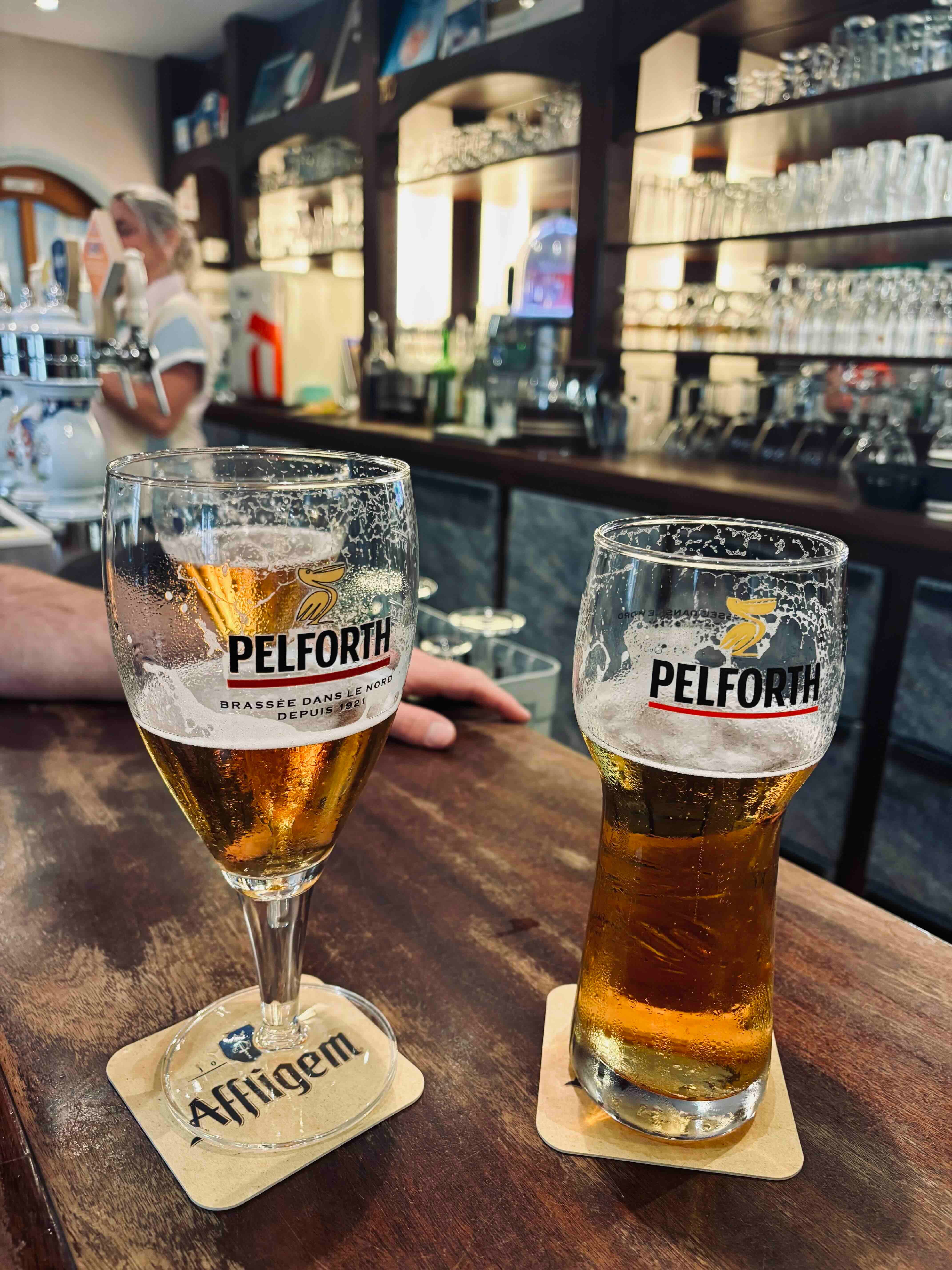
Le bar, the place to be
Rule one: never say “une bière”
Don’t walk into a French bar and say “une bière.” It technically means beer, but it’s too vague—like saying “one food, please.”
In France, beer means draft beer — la pression. You order the size. A demi is 25cl, the standard glass. Despite the name meaning “half,” this is a perfectly normal, adult-sized drink and the default order in any French bar. A pinte is 50cl. Those are your two options.
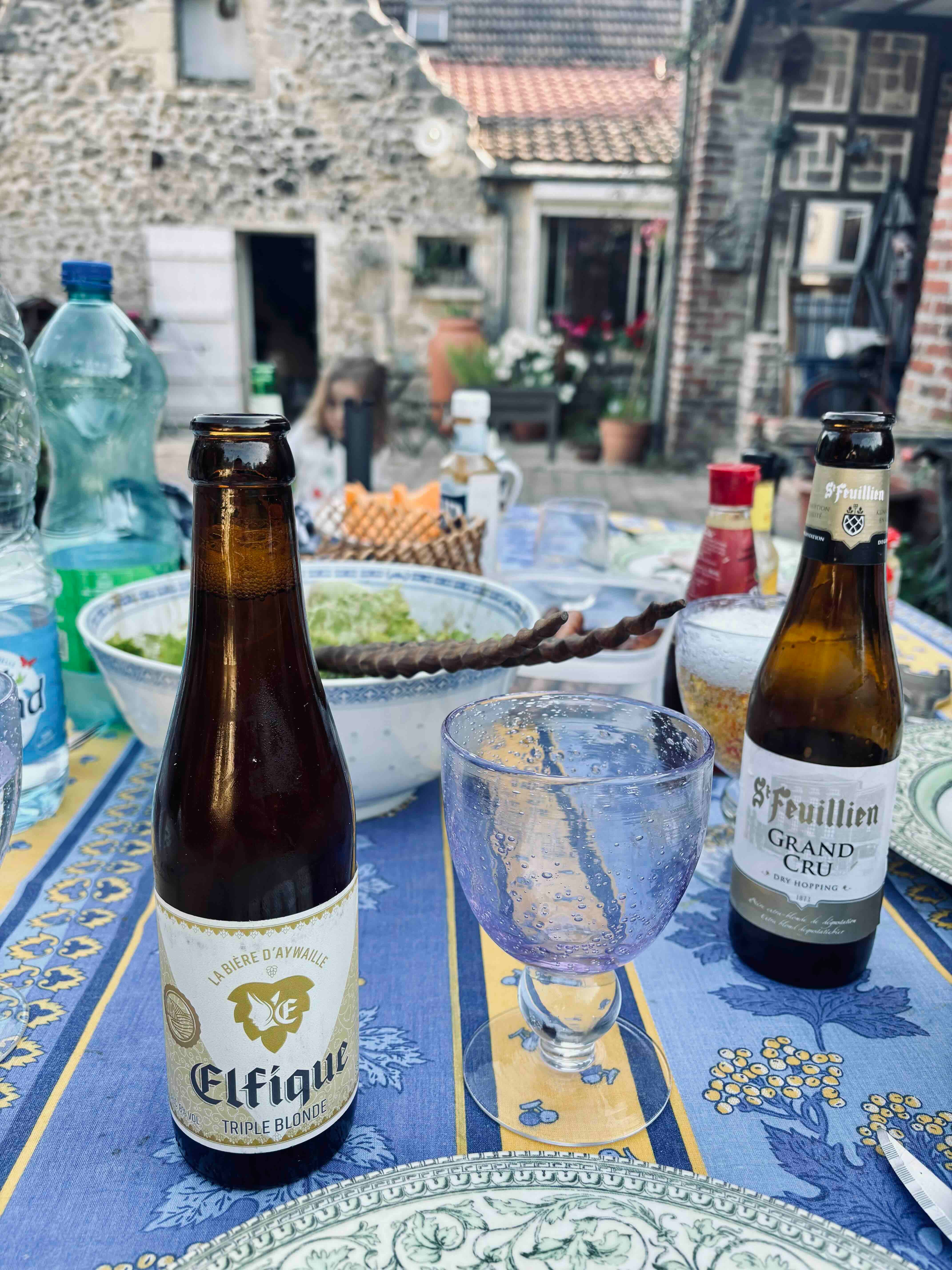
Bottled beer is mostly for drinking at home in France. As my daughter says: c’est comme ça la vie.
✓ The default:
« Je vais prendre un demi, s’il vous plaît. »
“I’ll have a demi, please.” — Confident. Natural. No tourist energy.
✓ You’re thirsty, go bigger:
« Une pinte, s’il vous plaît. »
“A pint, please.” — Perfectly acceptable. No judgment.
Once you’re comfortable — especially on a terrace where you can’t see the taps — ask the question that opens every good bar conversation:
✓ The real local opener
« Vous avez quoi en pression ? »
“What do you have on draft?” — The barman lists the beers, you choose one, and suddenly you stop sounding like someone translating from English in their head.
If you’re not sure which beer to pick, go for the one that sounds the most Belgian. Generally a safe bet. If you’re settling in for the afternoon, a blonde beer is reliable — light, consistent, hard to regret.
If you enjoy this kind of real, everyday French — the phrases people actually use, the social codes behind them, and the small cultural details textbooks usually ignore — you’ll probably enjoy the rest of this newsletter too.
How to get the barman’s attention
The French barman sees everything. He already knows you’re there. What works is catching his eye during a quiet moment, with a small nod or a soft “s’il vous plaît” once contact is made. Then he’ll finish what he’s doing and come to you.
Snapping fingers, waving across the room, calling out—none of it works. A little patience goes a long way, and once a barman likes you, the service becomes remarkably attentive.
The French barman has seen a thousand tourists wave at him like he’s a taxi. He will outlast all of them.
About water — yes, you can ask
Tap water is free and you can ask for it at any bar without awkwardness. Many people don’t know this and spend the whole trip buying bottled water.
« Vous pourriez nous apporter une carafe d’eau ? »
“Could you bring us a jug of tap water?” — Polite, fluid, and exactly the kind of phrasing you hear in real French cafés and restaurants. Because you’re using the conditional — vous pourriez (“could you”) — the sentence already sounds polite and natural in French. No need to add s’il vous plaît.
Drinking with professionals
By professionals, I mean what the French call des piliers de bar — people who are, in some fundamental sense, structurally fused to the counter. If you end up drinking with them, the rules shift.
Nobody settles the bill at the end. That creates complications. Instead, one person orders for everyone and pays immediately. Then someone else gets the next round. This is called payer sa tournée — paying your round — and it is a social contract, not a suggestion. There are codes. Rituals. An honor system. Even here, especially here.
Paying your round immediately
« Je vais payer de suite. »
“I’ll pay right away.” — Resets the counter to zero. Clean, efficient, respectable.
Claiming the next one
« La prochaine est pour moi. »
“The next one’s on me.” — And so the cycle continues until the bar closes or humanity collapses, whichever comes first.
When ordering for the whole table, one person speaks. Not everyone at once — that’s chaos:
✓ Ordering for a group
« On va prendre deux demis et un pastis. »
“We’ll have two demis and a pastis.” — One person, one order. Natural, efficient, the French way.
When everyone is drinking the same thing — or you just want another round — the most useful sentence in the French language reveals itself:
✓ The most useful sentence in France
« La même chose, s’il vous plaît. »
“The same thing, please.” — This sentence alone can carry you through an entire evening.
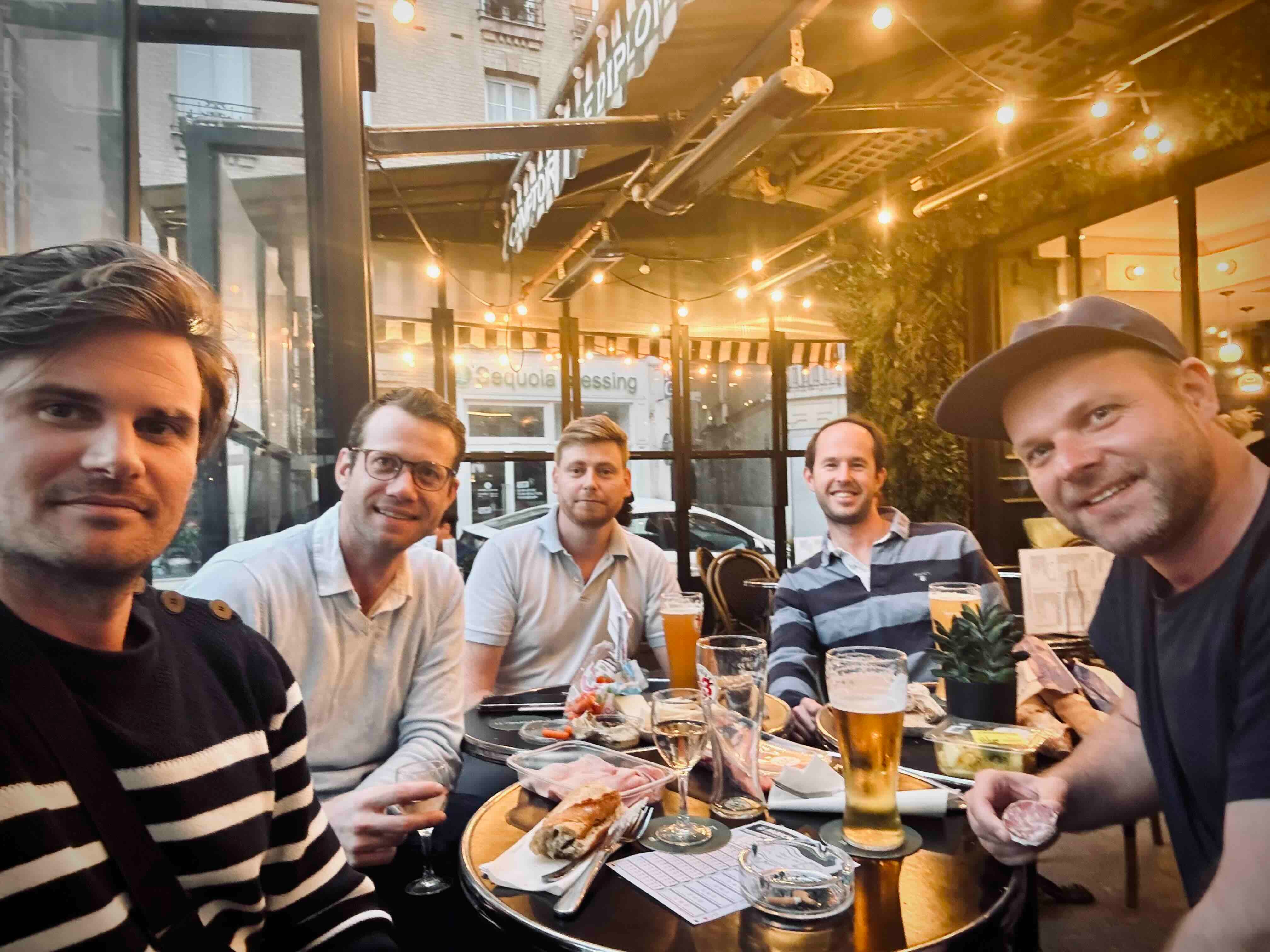
Picnic in a Paris PMU bar. With a smile, anything is possible… but nothing is guaranteed. À vos risques et périls !
The chips that appear unbidden
Sometimes a small bowl of chips or crackers appears next to your drink. You didn’t order it. You don’t pay for it.
Do not ask for it, because asking breaks the spell. It either arrives or it doesn’t, governed by forces beyond your understanding or control. Accept it when it comes, eat it without commentary, and move on with your life.
The Strange World of French Beer Cocktails
If you feel like experimenting with France’s strange little beer inventions, you have options.
There’s the panaché (beer mixed with lemonade).
The monaco (beer, lemonade, and grenadine syrup — bright red and suspiciously easy to drink).
The twist (beer with lemon soda, usually something like Sprite).
The demi-pêche (beer with peach syrup, beloved by French teenagers discovering alcohol for the first time).
And then there’s the mazout — beer mixed with Coca-Cola. If you really can’t live without Coke, there you go.
And if you ever find yourself north of Paris, order a Picon bière (beer with a bittersweet orange apéritif called Picon) and you’ll sound more local than the locals.
A few more phrases that will save you
In France, the bill does not arrive automatically. You must ask. Every time. Without exception.
« L’addition, s’il vous plaît. »
When you have absolutely no idea what you want to drink:
« Qu’est-ce que vous me conseillez ? »
“What do you recommend?” — Barmen love this. It works in any situation and immediately disarms any awkwardness.
Some small bars are still cash only, especially in remote places. Ask before you order, not after.
« Je peux payer par carte ? »
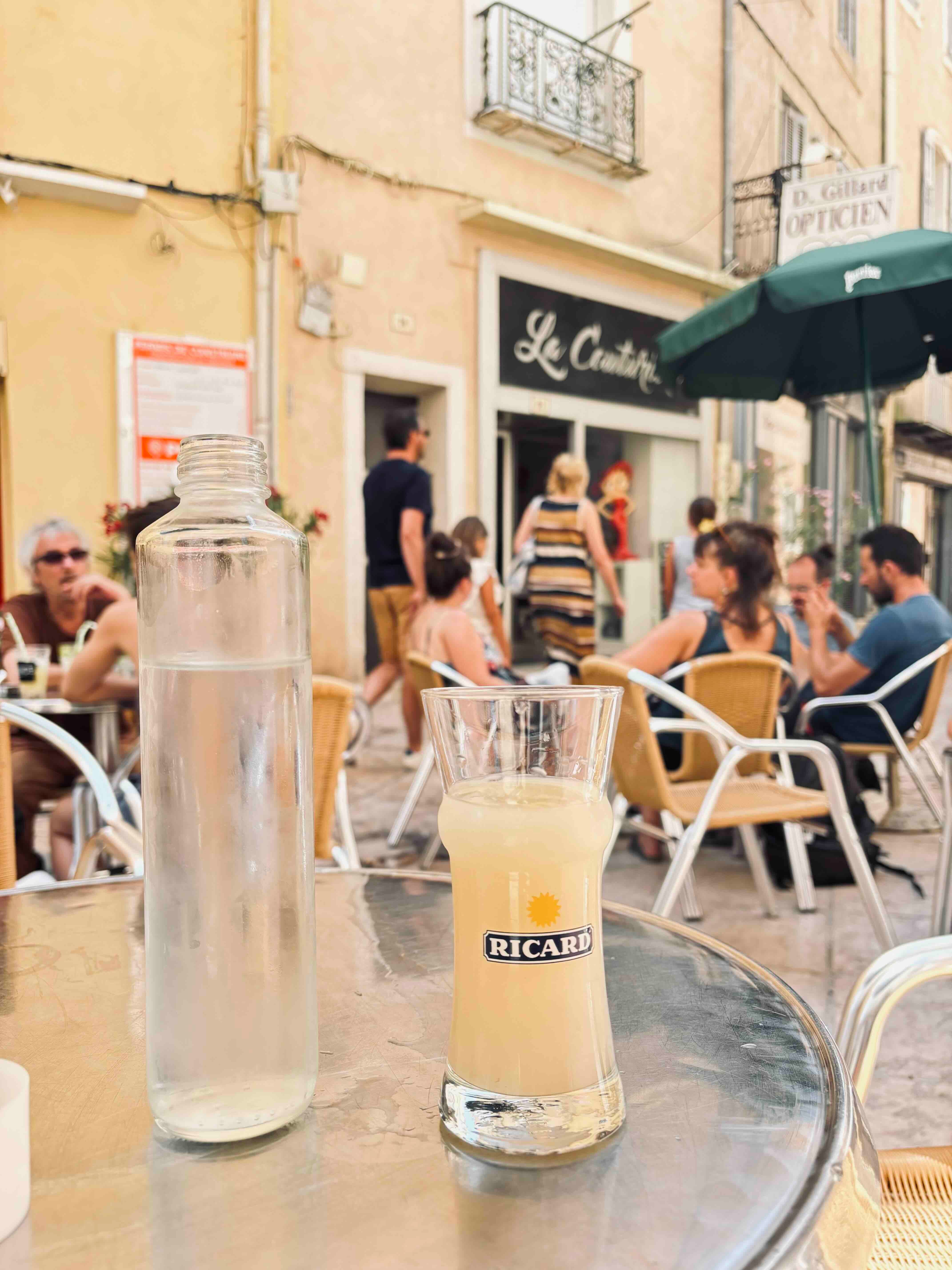
When I’m in the South of France, I swap beer for pastis. I can’t help it, it just happens automatically.
One last thing
You don’t tip 20%. Service is included in France. Round up the bill, leave a euro or two on the counter if the service was genuinely good, and don’t make a production of it. The barman is a professional. Treat him like one.
Say bonjour when you walk in. Say au revoir when you leave. Say s’il vous plaît and merci in between. These four things — not your accent, not your vocabulary — are what determine whether you’ll be welcomed back.
That’s the secret. It’s not about language. It’s about understanding the rhythm of the place, and showing a little respect for it.
And now I’m curious: what’s your own experience with French bars, cafés, or awkward drink orders? Have you ever confidently asked for something and immediately regretted it? Or discovered a drink you now order every time you’re in France? Tell me in the comments!
À votre santé.
Hey, I’m Timothée.
I write about the French language the way it’s actually lived: through cafés, music, awkward conversations, old expressions, cultural rituals, and all the small things textbooks usually forget.
If you enjoy learning French through stories, culture, music, and the hidden meaning behind words, you’ll probably enjoy the premium version of this newsletter.
Become a premium member and get access to full podcasts, translations, vocabulary notes, interactive exercises, and live workshops — all for about the price of a coffee each month.
If you enjoyed this content but don’t feel like subscribing just yet, you can always buy me a coffee. It’ll motivate me to create more content like this!
Many years ago I went to Paris with a couple of friends to watch Eng v Fr at Parc des Prince, to cut a long story short we couldn't get in and went back to the centre of Paris (around Rue St. Denis) to find a bar with a TV. We ended up in a place that also had a Tote style betting facility in the corner and many locals using it vociferously while watching the horde racing on the TV.
We had several rounds at a table and when it came to kick off time we asked the barman to switch to the Rugby, which he did. This caused consternation among the betting fraternity but the barman just shrugged and pointed to the large number of empty glasses on our table, and the fact that the locals were not really drinking much. The game started and France were doing well, especially the winger Emile Ntmack who I think scored at least twice. By this time the locals, many of whom were also of West African decent, became instantly converted to the game of Rugby Union.
We left some time later to lots smile and handshakes, especially from the barman.
Des conseils simples, pratiques et utiles. Vous avez peut-être sauvé la santé mentale de plus d'un(e)👏👏