


Bonjour à tous,
I had something very different planned for this week, but after what happened over the weekend, and with my students asking me about it, I’ve decided to move the week’s theme (a short clip from a romantic movie) to next week. Impossible de faire l’autruche ! (Literally “to do the ostrich”: to bury your head in the sand.) So here’s the new plan:
Today, we’ll go through the most important vocabulary and the sentence structures you need to give your opinion. On Friday, I’ll share the podcast where I give my opinion on what’s going on in France right now, and on Wednesday 28 October, the workshop will be a debate where you can talk about it and ask your questions.
Friday’s podcast and the workshop on 28 October are reserved for paid subscribers. If you’d like to join us, you can upgrade here:
Que s’est-il passé ?
On Saturday, October 17, approximately 550,000 people marched across France, according to the Ministry of the Interior (organizers always report higher numbers, it’s a tradition). The call to protest was intended to denounce the high cost of living, particularly fuel prices, and ultimately brought together a wide variety of discontented groups in the same streets: high school students who have been occupying their schools for a month to protest their educational conditions, the return of the “yellow vests,” as well as farmers, firefighters, healthcare workers, and climate activists.
In the evening, and again on Sunday, the situation escalated in several cities. Stores were looted in Marseille and Paris, the Lyon tourist office was set on fire, the Limoges city hall caught fire, and clashes lasted several hours near Place de la République in Paris. A protester died Saturday in Paris after collapsing near the march, likely as a result of a heart attack, and an investigation has been launched. More than 2,300 people were arrested over the weekend; Emmanuel Macron addressed the nation Sunday evening; and on Monday, several cities announced the imposition of a curfew.
In this article, I’m remaining neutral. On Friday, I won’t be.
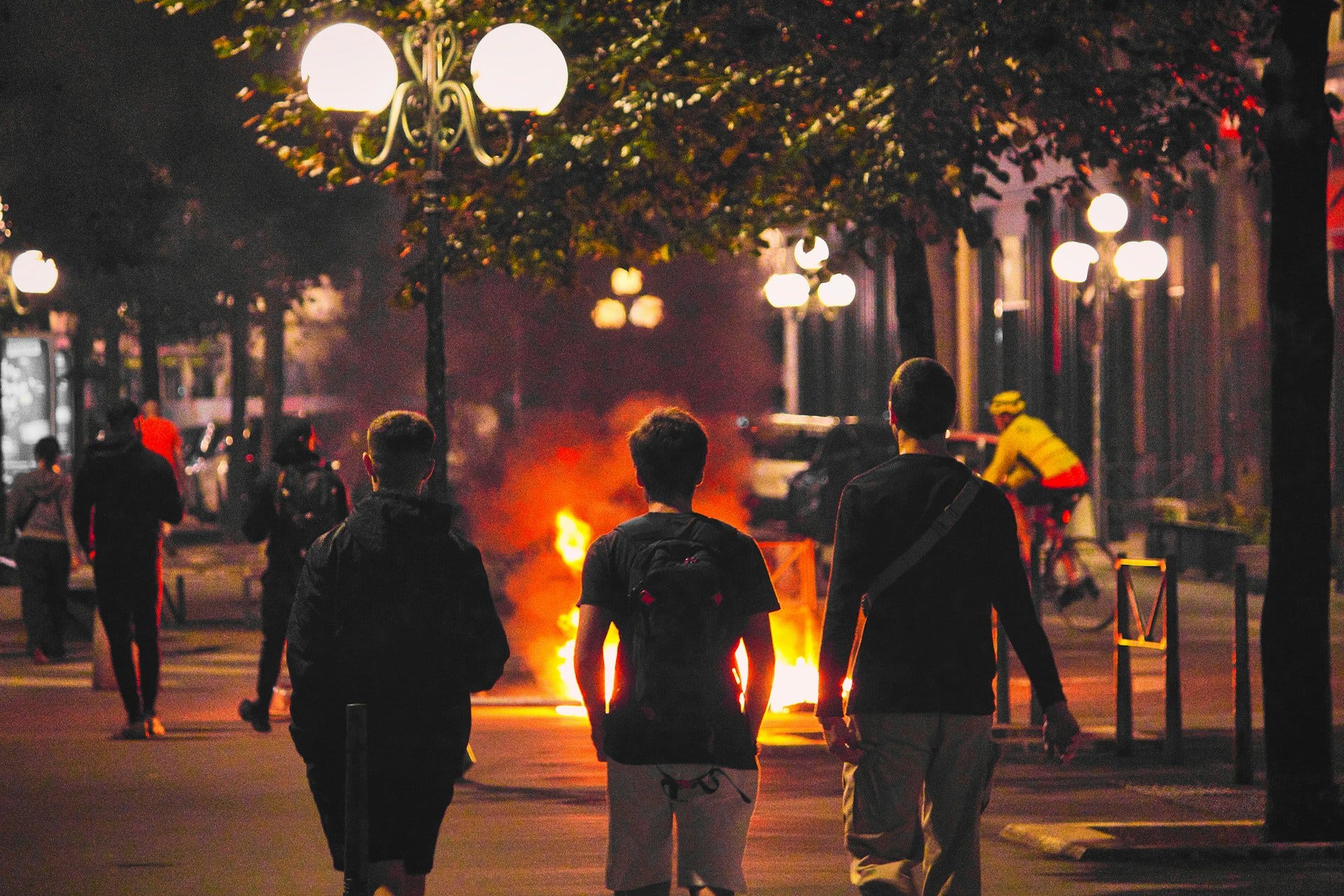
France, 2023. Photo de vegonaise sur Unsplash
Le vocabulaire essentiel
Le mouvement
la vie chère (f) : the high cost of living. Literally “the expensive life”. It’s the slogan of the whole movement: on manifeste contre la vie chère.
le pouvoir d’achat (m) : purchasing power. Turn on French TV for ten minutes and someone will say it. Le pouvoir d’achat des Français baisse.
la hausse (des prix, des carburants) : the rise (in prices, in fuel). The opposite is la baisse. Le carburant is the general word for fuel; at the pump you choose between l’essence (sans-plomb) and le gazole (diesel).
faire le plein : to fill up the tank. Faire le plein coûte une fortune.
manifester / une manifestation / une manif : to protest / a demonstration. In this context manifester has nothing to do with “to manifest”. In conversation everybody says la manif: Tu vas à la manif samedi ?
un manifestant, une manifestante : a protester.
se mobiliser / une mobilisation : to mobilise / a mobilisation. French media call a protest day une journée de mobilisation. It sounds a bit military, but it’s completely normal.
les revendications (f) : the demands of a movement. Quelles sont leurs revendications ?
la grève / faire grève : a strike / to go on strike. A manif and a grève are two different things: you can march on a Saturday without being on strike. The unions have called a strike day for 5 November.
les lycéens : high-school students (15 to 18). Classic mistake: les étudiants are at university, les lycéens are at the lycée.
un blocus : a school blockade. Students pile up bins in front of the gate so nobody can get in. Mon lycée est bloqué depuis lundi.
les gilets jaunes : the yellow vests, the 2018 movement that started on roundabouts, already over fuel prices. Some of them are back.
la convergence des luttes : when different movements join forces. A very French idea, and the ultimate dream of every activist.
battre le pavé : to take to the streets. Literally “to beat the cobblestones”. More colourful than manifester, and journalists love it.
Quand ça dégénère
dégénérer / déraper : to get out of hand. La manif a dégénéré en fin de journée. You’ll also hear tourner au chaos.
les débordements (m) : incidents, things spilling over. Literally “overflows”. It’s the polite word the media use for everything from a broken window to a burning car.