

Still confused about passé composé vs imparfait? You’re not alone. These two past tenses are essential for storytelling in French, but knowing when to use each one can feel overwhelming. The truth is, if you want to describe a memory, talk about your childhood, explain what happened yesterday, or even understand a French movie, you need to master this contrast.
In this week’s lesson, I break it all down with clear explanations, practical examples, two exercises and full corrections. You can also download the lesson as a PDF to keep or print.
When telling a story in French, we often use two different past tenses:
→ passé composé
→ imparfait
But how do you choose between them?
1. Imparfait: to describe, set the scene, or talk about habits
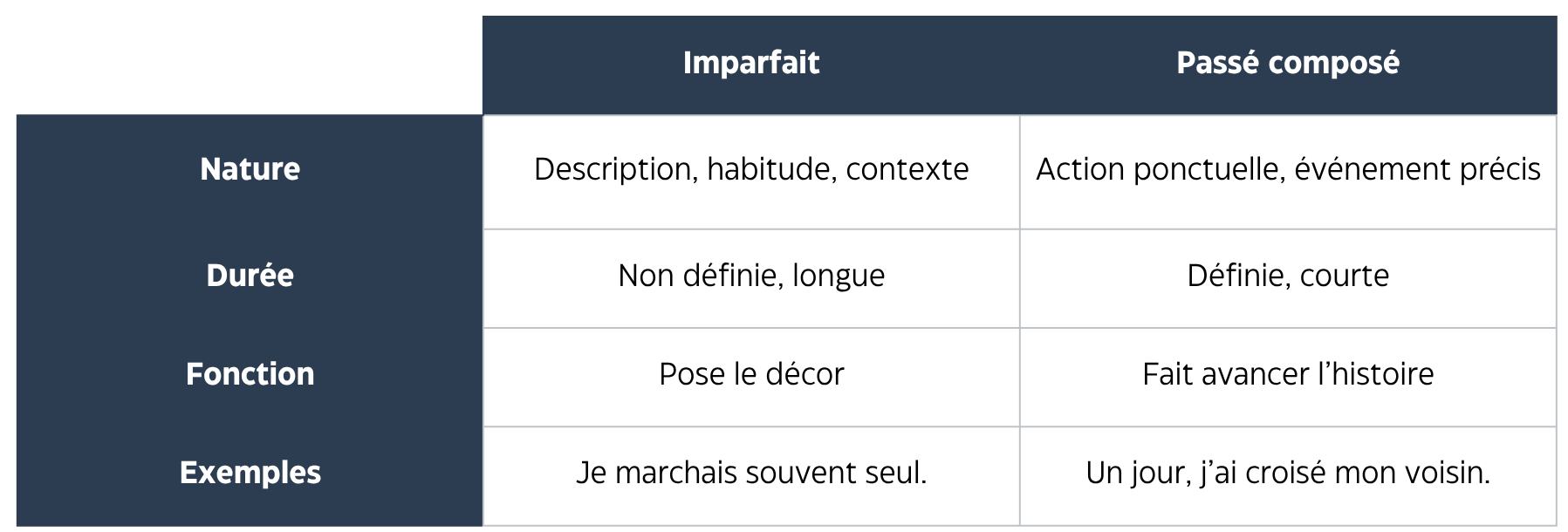
The imparfait is used to describe things that lasted, repeated, or formed the background in the past.
You use it for:
descriptions (weather, place, emotions, physical or mental states)
repeated or habitual actions
ongoing situations without a defined beginning or end
Examples:
Le ciel était gris et il pleuvait doucement.
(The sky was gray and it was raining softly.)Tous les dimanches, nous allions au marché.
(Every Sunday, we used to go to the market.)Quand j’étais enfant, je jouais souvent dans le jardin.
(When I was a child, I often played in the garden.)
2. Passé composé: to talk about completed, specific actions
The passé composé is used to describe what happened at a particular moment, often in a narrative or a series of events.
You use it for:
one-time events
actions completed in the past
facts that move the story forward
Examples:
Hier, elle a rencontré un vieil ami.
(Yesterday, she met an old friend.)Il a commencé à pleuvoir vers 18h.
(It started raining around 6 p.m.)J’ai oublié mon parapluie dans le bus.
(I forgot my umbrella on the bus.)
3. Using both tenses together: how to combine them?
When telling a story, the imparfait sets the scene, and the passé composé tells what happened.
Example:
Il faisait froid, la rue était vide.
(It was cold, the street was empty.)
Tout à coup, un chien a surgi de nulle part et a aboyé très fort.
(Suddenly, a dog appeared out of nowhere and barked loudly.)
Here:
Imparfait describes the background (the cold, the empty street).
Passé composé tells the events that occurred.
4. Useful Keywords
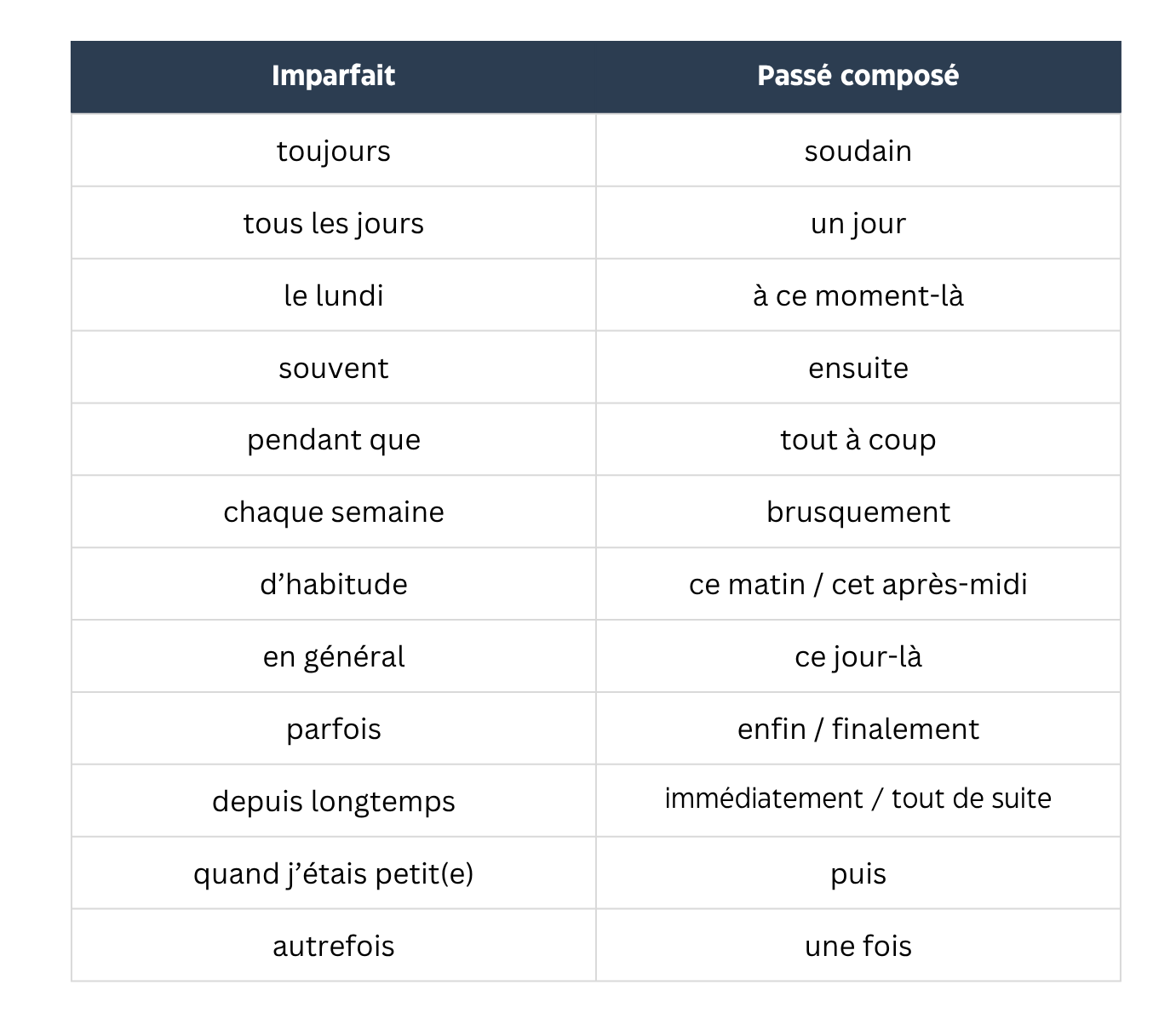
Certain words or expressions provide clues about which tense to use:

📚 Fichier PDF : 🔒🔒 Become paid subscriber to get the link
N’hésite pas à poser tes questions en commentaire ou dans le chat privé !